
- From
-
Published on
18.12.20
- Impact Area
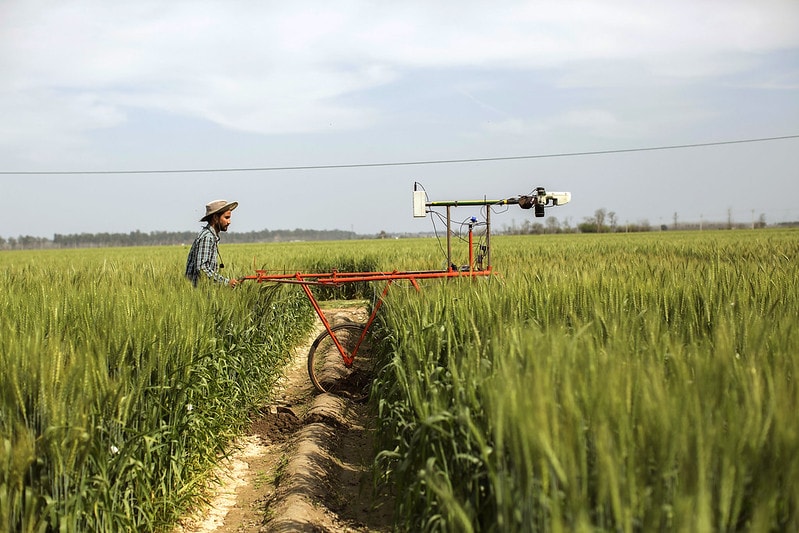
New research by an international team of scientists, including scientists from the International Maize and Wheat Improvement Center (CIMMYT) and the Indian Council of Agricultural Research (ICAR), shows that adopting a portfolio of conservation agriculture and crop diversification practices is more profitable and better for the environment than conventional agriculture.
Reported last month in Nature Scientific Reports, the results of the study should encourage farmers and policymakers in South Asia to adopt more sustainable crop management solutions such as diversifying crop rotations, direct-seeding rice, zero tillage and crop residue retention.
Related news
-

Mapping for Resilience: How Spatial Data is Transforming Karamoja Cluster
02.07.25-
Climate adaptation & mitigation
Pastoral communities in the Karamoja Cluster (a region spanning Kenya, Uganda, South Sudan, and Ethi…
Read more -
-

Building Resilience and Regeneration: The Central Highlands Ecoregion Foodscape (CHEF)
02.07.25-
Climate adaptation & mitigation
At the CGIAR Sustainable Farming Program (SFP), we believe that collaboration is essential for trans…
Read more -
-

Planting with Precision: How Weather and Climate Information is Changing Bean Farming in Rwanda
01.07.25-
Climate adaptation & mitigation
Imagine weather information as a GPS for farmers. Without it, the journey becomes uncertain, filled…
Read more -